Ever open your bathroom cabinet and get hit by a whirlwind of bottles, creams, and random toiletries? It’s frustrating when things you need hide behind clutter — like searching for a tiny needle in a messy haystack. But messy bathroom cabinets aren’t just a minor annoyance; they can slow down your mornings and add unnecessary stress.
When your bathroom cabinet is disorganized, you waste precious minutes hunting for essentials, which can throw off your entire day. Over time, the clutter can pile up, eating into your space and making it even harder to find what you actually need. It’s not just about neatness — it’s about creating a calming environment that helps you start your day right.
By the end, you’ll have practical techniques to master bathroom cabinet organization that actually stick. We’ll walk through easy steps to clear the clutter, choose smart storage solutions, and keep your cabinet tidy for good. Ready to tackle the mess and reclaim your bathroom sanity? Let’s dive into how to assess your current setup first.
Assess Your Current Bathroom Cabinet Setup
How well do you really know your bathroom cabinet setup? Before diving into organizing, it’s crucial to understand the current state of your space. An honest assessment lets you identify problem areas — whether it’s overflowing shelves, expired products, or inefficient layouts that waste room.
Start by taking everything out. This might sound daunting, but it’s the clearest way to see what’s inside, broken items, or duplicates that you didn’t realize you had. The National Association of Professional Organizers recommends this powerful visual reset as a first step to successful organization.
- Inspect for expired or empty containers — clutter often builds because we hold onto things we don’t need.
- Note the cabinet dimensions — height, width, and depth matter when choosing storage solutions later.
- Pay attention to cabinet accessibility — are items easy to reach or buried behind others?
Picture this scenario: you open your cabinet, and it’s jam-packed with various bottles and random products. Some are suitable for daily routines, others you never touch. How often does that stress you out? Recognizing these pain points will guide how you reorganize.
💡 Pro Tip: Document your findings with photos or notes before you start rearranging — this creates a baseline to measure your progress. According to the Institute for Challenging Disorganization, this initial evaluation reduces decision fatigue later.
| Assessment Step | Purpose |
|---|---|
| Empty Cabinet Completely | Reveal all contents and spot forgotten items |
| Sort Items Into Categories | Group like with like — skincare, haircare, medications |
| Measure Cabinet Dimensions | Plan appropriate storage containers and shelf dividers |
| Identify Accessibility Issues | Ensure frequently used items are easy to reach |
Assessing your current bathroom cabinet setup gives you clarity to tackle clutter strategically. But there’s one detail most owners completely overlook until it’s too late…
Sort And Declutter Unnecessary Items
Why do we hold onto bathroom items we rarely use? It’s a common challenge that adds to clutter — and honestly, it’s okay to let go. Sorting and decluttering is the game-changer step where true progress begins.
Here’s the thing: your cabinet probably houses expired products, duplicates, or things you just don’t reach for anymore. Keeping these only wastes space and makes finding essentials harder. The Environmental Protection Agency notes that cosmetics and personal care products past their expiration date can lose effectiveness and sometimes cause skin irritation, so clearing them out is not just about tidiness—it’s safer for you.
Start by dividing everything into three clear categories: keep, toss, and donate. If you haven’t used a product in six months or if it’s expired, it belongs in the toss pile. Don’t forget to check labels carefully!
- Empty your cabinet and lay out all items on a clean surface.
- Check expiration dates and condition—products past due or separating should be discarded.
- Group duplicates and decide which to keep based on the condition and your preference.
- Set aside unopened or gently used products you no longer want for donation, if applicable.
- Dispose of any hazardous items properly, following local guidelines.
💡 Pro Tip: Use airtight bins or labeled containers for your keep pile—this not only streamlines your cabinet but protects products from moisture and sunlight, preserving their shelf life according to the Cosmetic Ingredient Review.
| Category | Criteria | Action |
|---|---|---|
| Keep | Currently used, unexpired, good condition | Organize efficiently in cabinet |
| Toss | Expired, separated, or damaged products | Dispose safely and promptly |
| Donate | Unopened or gently used items you won’t use | Give to charities or friends as appropriate |
In practice: imagine opening your cabinet and instantly spotting your favorite moisturizer, instead of digging through half-empty bottles. It’s a breath of fresh air. And this is exactly where most people make the most common mistake—holding onto things “just in case” instead of making space for what really matters.
Choose Practical Storage Solutions
Wondering how to best contain all those bathroom essentials without cramming everything in a chaotic mess? Choosing practical storage solutions is the key to maximizing space and making your daily routine smoother. The truth is: one-size-fits-all rarely works here — understanding your cabinet’s shape and your usage habits guides smart storage choices.
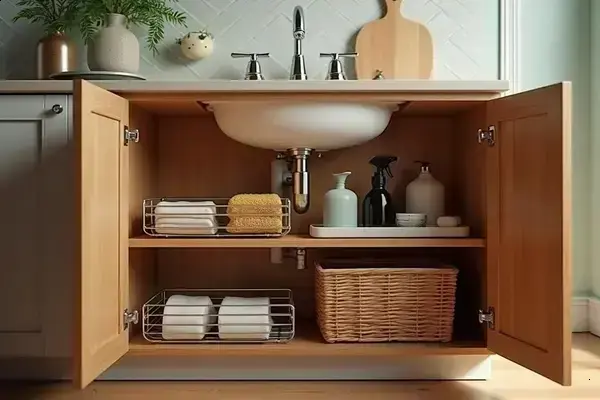
Here’s the thing: your bathroom cabinet isn’t just storage — it’s your personal convenience spot. So, the layout and containers must reflect how you use items. For instance, clear acrylic bins help you spot products instantly, while tiered shelves can expand vertical space, turning cramped cabinets into orderly bliss.
Picture this scenario: Jennifer, juggling work and family, struggled with constantly misplaced hair products and skincare. Introducing stackable bins and labeled baskets turned her cabinet chaos into calm within an afternoon. It’s about making life’s small moments easier.
- Measure Your Cabinet Precisely – note widths, heights, and depths so containers fit perfectly.
- Select Storage Based on Item Categories – use drawer organizers for small items like makeup, baskets for towels, and jars for cotton swabs.
- Opt for Transparent or Labeled Containers – visibility reduces time spent searching.
- Consider Multi-Level or Hanging Solutions – maximize vertical space to keep frequently used products within arm’s reach.
- Choose Moisture-Resistant Materials – plastic, metal, or treated wood withstand bathroom humidity better than untreated materials.
💡 Pro Tip: The National Kitchen & Bath Association recommends using adjustable shelving and modular accessories to easily adapt storage as your needs change.
| Storage Type | Best For | Pros |
|---|---|---|
| Clear Acrylic Bins | Skincare products, makeup, small toiletries | Easy to see contents, stackable, lightweight |
| Tiered Shelves | Maximizing vertical cabinet space | Accessible layers, customizable height |
| Hanging Baskets or Hooks | Hairdryers, brushes, towels | Keeps items off surfaces, frees up shelf space |
Choosing the right storage isn’t just about tidiness — it’s about designing a system that fits you. What actually works might surprise you when you match solutions to your habits rather than just aesthetics.
Organize Items By Frequency Of Use
Ever wonder why your bathroom cabinet still feels cluttered even after organizing? The secret often lies in how you arrange items based on how often you use them. Here’s the thing: placing everyday essentials within easy reach and less frequently used items tucked away can transform not just your space — but your entire routine.
Imagine grabbing your toothbrush and toothpaste effortlessly without digging through a pile of hair products or expired lotions. This method minimizes frustration and speeds up your morning or evening ritual. According to the American Cleaning Institute, organizing by frequency improves efficiency and reduces stress.
Start by sorting your items into three groups: daily use, weekly use, and occasional use. Daily essentials should be front and center — think facial cleanser, toothbrush, or shaving cream. Weekly items, like deep conditioners or specialty creams, can reside in the middle shelves. Rarely used products, such as travel-sized bottles or backup toiletries, belong in less accessible spaces.
- Identify and group items by usage frequency.
- Designate prime spots for daily essentials at eye level.
- Use labeled containers to separate weekly and occasional items.
- Reserve harder-to-reach spaces for rare-use products.
- Adjust placement seasonally or as your routine evolves.
💡 Pro Tip: Using clear bins or drawer dividers can visually separate usage groups, making your cabinet not only tidy but intuitive according to organizational experts at the National Association of Professional Organizers.
| Usage Frequency | Examples | Best Storage Location |
|---|---|---|
| Daily | Toothbrush, facial cleanser, deodorant | Front and center, eye level |
| Weekly | Hair treatments, exfoliators | Middle shelves or bins |
| Occasional | Backup toiletries, travel items | Top or bottom shelves |
In practice: Picture Sarah, who reorganized her cabinet this way and cut her morning prep by 5 minutes daily — a small change with a big impact. But there’s one detail most owners completely overlook until it’s too late…
Maintain Your Bathroom Cabinet Organization Regularly
How do you keep your bathroom cabinet from slipping back into chaos after all your hard work? The truth is: maintenance is where many people falter. Keeping your space organized is less about one massive overhaul and more about small, regular habits that protect your progress.
Here’s the thing: clutter and disorganization creep in slowly — leftover samples, new purchases, or forgotten expired products all pile up unless you stay on top of them. The American Cleaning Institute highlights that a few minutes a week dedicated to tidying can prevent overwhelming messes and reduce daily stress.
Start with simple rituals like a weekly 10-minute scan to toss expired items and realign things that have shifted. Make it part of your cleaning routine and assign a specific day to check your cabinet, whether Sunday evening or Friday morning. Variety matters, too — mixing deeper monthly declutters with these quick weekly touch-ups keeps your cabinet balanced and functional.
- Set a regular schedule for cabinet check-ins, weekly and monthly.
- Immediately remove expired or empty products.
- Replace or reposition items that have moved out of place.
- Adjust storage containers if your needs or products change.
- Celebrate your organized space—visual rewards boost motivation.
💡 Pro Tip: Keep a small basket inside your cabinet so you can easily gather expired or unwanted items throughout the week — clearing it out weekly saves time and hassle.
| Maintenance Task | Frequency | Purpose |
|---|---|---|
| Quick Weekly Tidy | Weekly (10 minutes) | Remove expired items, realign products |
| Monthly Deep Clean | Monthly (30 minutes) | Complete emptying, dusting, reassess storage needs |
| Inventory Update | Quarterly | Check supplies, reduce duplicate purchases |
In practice: imagine Carla, who transforms her bathroom time by turning cabinet maintenance into a quick, satisfying ritual. This habit turned a dreaded chore into a moment of calm. What actually works might surprise you…
Your Bathroom Cabinet Makeover Awaits
If you take just one thing from this guide, let it be: organizing your bathroom cabinet by assessing, decluttering, and smart storage makes your daily routine easier. Bathroom cabinet organization isn’t just tidying up; it’s about clear spaces that reduce stress and save time.
Before reading, your cabinet probably felt overwhelming and messy — grabbing what you need was a hassle. Now, imagine opening it and instantly finding what you want, with everything in its place. That calm, efficient space is within reach, and you’re fully capable of making it happen.
Which storage solution or organizing step do you plan to try first in your bathroom? Share your thoughts in the comments — we’re excited to hear about your progress!