
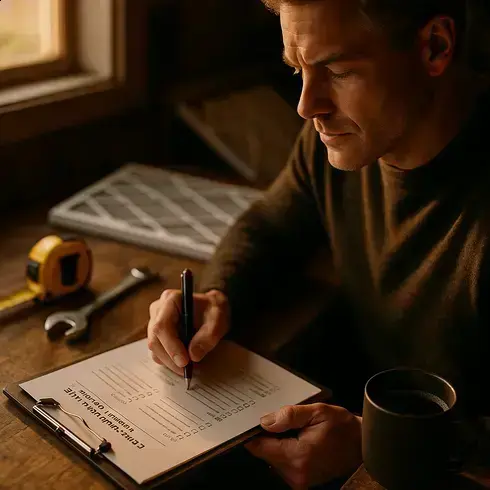
Saturday morning. You grab coffee, open the garage—and spot a leak, a wobbly step, and a dying filter. A home maintenance checklist printable keeps that chaos from owning your weekend.
Most of us wait until something fails. Small fixes grow teeth: higher energy bills, surprise plumber fees, mold creeping in. Without a simple plan, you spend more, stress more, and still miss the tasks that prevent real damage.
By the end, you’ll have clear seasonal steps, quick visual checks, and a printable you can post—your home maintenance checklist printable. You’ll know what to do, when to do it, and when to call for help. Ready to start with spring?
Spring Maintenance: Repair Winter Wear And Refresh Systems
Winter hid problems in plain sight. Tiny cracks, soaked wood, and tired systems waited out the cold—spring is your chance to fix them before they snowball.
Here’s the thing: water is sneaky, and heat is expensive. Loose flashing, clogged gutters, and a dusty air filter turn into leaks, mold, and higher utility bills fast.
💡 Pro Tip: Test smoke and CO alarms, plus every GFCI outlet, this week. The National Fire Protection Association recommends monthly tests; two minutes now prevents silent failures.
| Area | Red Flag | Why It Matters |
|---|---|---|
| Roof & Flashing | Lifted shingles, gaps at vents | Stops wind‑driven rain and wood rot before repairs widen |
| Gutters & Downspouts | Sludge, standing water | Prevents foundation seepage; EPA notes moisture fuels mold growth |
| HVAC Filter & Drain | Filter >90 days, algae in line | Avoids overflow and boosts cooling efficiency (U.S. Department of Energy) |
Picture this scenario: after a wet winter in a 1960s ranch, you open the furnace panel and spot a slimy condensate tube. Ten minutes with vinegar and a wet/dry vac save a $300 call—and the ceiling below.
Time needed: 2–4 hours in a typical three‑bedroom. Prerequisites: a dry day above 50°F, a steady ladder, and a helper for roof‑edge work. If you suspect structural, electrical, or gas issues, call a licensed pro first.
- Work gloves and safety glasses
- Sturdy ladder and gutter scoop
- Exterior‑grade silicone caulk
- Weatherstripping
- MERV 8–13 HVAC filter
- Circuit tester and wet/dry vacuum
Step‑By‑Step: Refresh Systems And Seal The Shell
- Walk the exterior from the ground. Use binoculars to scan shingles, flashing, and chimney caps; note missing granules or daylight gaps.
- Clean gutters end‑to‑end. Flush with a hose; confirm downspouts discharge 5–10 feet from the foundation using extensions or splash blocks.
- Seal the shell. Scrape failing caulk around trim and penetrations; re‑caulk with exterior silicone. Replace torn weatherstripping at doors.
- Check grading. Soil should slope 1 inch per foot away from the house for 5–6 feet—add soil where water pools.
- Replace the HVAC filter (MERV 8–13). The DOE advises frequent changes during heavy use; write the date on the frame.
- Clear the condensate drain. Detach the trap, flush with a 50/50 vinegar mix, then vacuum the outlet outside to restore flow.
- Test safety devices. Press “test” on smoke/CO alarms; reset any tripped GFCIs with a circuit tester to confirm protection.
What actually works might surprise you—most savings come from these small, boring fixes, not big upgrades…
Summer Maintenance: Safety Checks, Cooling Efficiency, And Outdoor Care
Summer heat turns little issues into big energy costs—and safety risks. ACs work harder, decks dry out, and outdoor outlets see more action than the holidays.
Here’s the thing: cooling efficiently isn’t just comfort. It protects your system, your bill, and your family’s safety during heat waves and backyard weekends.
💡 Pro Tip: The U.S. Department of Energy recommends setting your thermostat to about 78°F when you’re home in summer and using ceiling fans (counterclockwise) to feel 4°F cooler without dropping the setpoint.
Quick Wins For Cooling Efficiency
Worried about high bills and short AC cycles? Target airflow and heat gain first—cheap fixes beat pricey upgrades when basics are off.
- Change the HVAC filter every 30–60 days in heavy use; a clogged filter spikes static pressure and shortens compressor life.
- Clean the outdoor condenser gently: cut back vegetation 2–3 feet, rinse fins from the inside out, and straighten bent fins with a soft fin comb.
- Check the suction line insulation (the thicker pipe). Replace cracked foam to keep refrigerant cold and improve capacity.
- Seal big return leaks with mastic, not duct tape. Even a 10% leak wastes tons of cooled air into the attic.
- Block solar gain: close south/west blinds by noon, add reflective film or thermal curtains, and shade patios where possible.
In practice: a townhome owner brushed dirt from a matted condenser, replaced a $12 filter, and sealed a thumb-size return gap. The next bill? About 12% lower during a heat advisory—no equipment upgrade needed (results vary).
Outdoor Care And Safety Pass
Backyards get busy—grills, pools, and power tools. A fast safety sweep keeps weekends fun and insurance claims quiet.
- Inspect GFCI outlets on patios and near water. Test and reset; the Consumer Product Safety Commission stresses GFCIs reduce fatal shock risk outdoors.
- Grill check: keep 10 feet from siding, clear grease trays, and soap-test gas hoses for bubbles that reveal leaks.
- Deck and rails: tighten lag bolts, tap down popped nails, and seal exposed end grain to slow UV and moisture damage.
- Irrigation tune: water at dawn, aim for about 1 inch per week (use a tuna can to measure), and test the backflow preventer per your city’s guidance.
- Pool gear: empty pump baskets, confirm the motor runs quiet, and verify barriers self-latch after every use.
But there’s one detail most owners completely overlook until it’s too late…
Fall Maintenance: Preventive Tasks To Weatherproof Before The Cold
Fall is your buffer zone. A few smart fixes now keep heat in, water out—and winter from turning tiny gaps into expensive problems.
Worried about drafts and surprise heating bills? Here’s the thing: cold air finds the weakest spots first, then ice and wind make them worse all season.
💡 Pro Tip: The National Fire Protection Association advises annual chimney inspections; a certified sweep catches creosote and cracked liners before you light the first fire.
Five Fast Moves Before First Frost
- Run a heat test. Set the thermostat to heat, listen for the burner or heat pump, and verify warm supply air within 5–10 minutes.
- Upgrade attic performance. The U.S. Department of Energy recommends about R‑38 to R‑60 in most attics—measure depth and add blown‑in where low.
- Clean and extend drainage. Clear gutters, flush downspouts, and add 5–10 feet of extension to push runoff away from the foundation.
- Seal air leaks. Caulk trim and pipe penetrations; add door sweeps and weatherstripping to stop stack‑effect drafts at their source.
- Protect plumbing. Shut off and drain outdoor faucets; disconnect hoses to prevent trapped water and split valves.
- Test sump readiness. Pour water into the pit; the pump should cycle on quickly and discharge outside without backflow.
| Material | Best For | Lifespan/Notes |
|---|---|---|
| 100% Silicone Caulk | Exterior joints, wet areas | 20+ years; flexible, UV‑resistant, slow cure |
| Foam Weatherstripping | Door jambs, window sashes | 1–3 years; quick install, replace as compressed |
| Door Sweep (Aluminum + Vinyl) | Bottom of entry doors | 5–8 years; blocks drafts and pests |
In practice: a split‑level owner added a $18 door sweep, ran a bead of silicone around a leaky meter base, and snapped on two downspout extensions. The next cold snap felt different—less whistling, fewer cold spots, and a quieter furnace cycle.
And this is exactly where most people make the most common mistake—skipping the attic bypasses while chasing window drafts…
Winter Maintenance: Protect Pipes, Heat Smart, And Stay Dry
Bitter cold finds weak points fast. Pipes freeze, roofs sweat, and small drafts turn into hard-to-heat rooms—unless you prepare before the next snap.
Here’s the thing: water expands as it freezes, and pressure bursts the thinnest sections first. That’s usually near hose bibs, crawlspaces, and tight bends behind cabinets.
Want a simple plan that actually works? Keep heat steady, move air where pipes hide, and control indoor humidity so surfaces don’t condense and feed mold during long freezes.
In practice: picture this scenario—overnight temps drop to 12°F. You open the sink base, set the faucet to a slow drip, and slide foam sleeves over the exposed copper. By morning, water still flows, and the Insurance Institute for Business & Home Safety’s rule of thumb holds up: pipes tend to freeze when outdoor temperatures dip below about 20°F, so those tiny moves mattered.
⚠️ Important Warning: Never use grills, ovens, or unvented fuel heaters indoors for warmth. The Centers for Disease Control and Prevention notes carbon monoxide risk spikes during winter storms and power outages.
Quick Reference: Freeze And Moisture Hotspots
| Sign | Likely Cause | Action Now |
|---|---|---|
| Slow trickle at far sink | Perimeter pipe in exterior wall | Open cabinet doors, drip warm and cold, aim a small fan toward the plumbing |
| Ceiling stains after thaw | Ice dam forcing meltwater under shingles | Rake snow from 3–4 feet of eaves; keep attic cool and ventilated to limit melt‑refreeze |
| Foggy windows + musty smell | High indoor RH from cooking/showers | Run bath fans 20–30 minutes; target 30–50% RH per ASHRAE comfort guidance |
Heat smart means consistency. Set the thermostat a few degrees higher in extreme cold, close unused room registers sparingly (pressure goes somewhere), and let interior doors stay open to balance airflow.
Staying dry is half the battle. Clear the weep holes on storm windows, check the water heater’s T&P discharge line for drips, and keep snow piled away from foundation vents and window wells.
And this is exactly where most people make the most common mistake—waiting to call for help until after a rupture, not when the first signs of freeze show…
When To DIY And When To Call A Pro
Deciding what to tackle yourself versus hiring out isn’t about pride—it’s about risk, code, and total cost over time. Safe wins beat cheap fixes every day.
Here’s the thing: if a task touches gas, main electricity, structural loads, or refrigerant, it’s not a weekend project. Permits, diagnostics, and warranties matter more than you think.
💡 Pro Tip: EPA Section 608 requires certification to handle refrigerants, and NFPA 70 (National Electrical Code) governs panel work—both are clear lines where a licensed pro is the right call.
| Task | DIY Or Pro? | Why |
|---|---|---|
| Replace Weatherstripping | DIY | Low risk; immediate energy savings and comfort |
| Clean Single‑Story Gutters | DIY (with spotter) | OSHA ladder safety rules apply; wear gloves/eye protection |
| Reset GFCI/AFCI Trips | DIY (initial) | Okay once; repeated trips suggest a fault—call an electrician |
| HVAC Refrigerant Leak/Charge | Pro | EPA 608; improper charge harms compressor and voids warranty |
| Add Circuit/Replace Panel | Pro | NEC compliance, permit, load calc; shock/fire risk otherwise |
| Gas Appliance Service/Leaks | Pro | Combustion safety and carbon monoxide risk |
Picture this scenario: a breaker trips every other day after rain. You swap the outlet—still trips. An electrician runs insulation resistance tests and finds a damp junction in the soffit. The $159 service call beats weeks of guesswork and a potential arc fault.
A Simple 3‑Step Decision Filter
- Scope the risk. Does it involve gas, live wiring, structural cuts, or roof work? If yes, lean pro—no debate.
- Count true costs. Add tools, materials, permits, repeat trips, and a possible home insurance claim deductible if it goes wrong.
- Weigh performance. HVAC sizing (ACCA Manual J), blower‑door tests, and infrared scans optimize comfort and bills—pros bring calibrated gear and labor warranties.
Worth noting: many municipalities follow the International Residential Code via the International Code Council—permits protect resale value and insurance coverage.
The right habits in place now make everything easier from here.
Your Home Care, On Schedule
You now know what to hit each season, how to boost efficiency and safety fast, and when a pro is worth every dollar. If you take just one thing from this guide, let it be: consistent, seasonal upkeep beats emergency repairs. Print and post your home maintenance checklist printable so the small tasks actually get done—before problems grow.
Before, maintenance felt random—leaks, drafts, and surprise bills. Now you’ve got a clear plan by season, quick visual checks, and simple steps that fit a Saturday morning. You’ll spend less, stress less, and catch issues early. Small moves, done on time, protect your home and your wallet.
Which task will you tackle first—gutters, the HVAC filter, or sealing those door gaps? Tell us in the comments; we’re cheering you on.

About the Author:
Claire Anne Foster is a home organization enthusiast, lifestyle writer, and the founder of this blog — built for people who want a cleaner, calmer home without spending every weekend doing it.
After years of testing every organization system, planner, and cleaning routine she could find, Claire realized that most advice was either too complicated to maintain or too generic to be useful. So she started creating her own — simple, printable, and designed for real life with real schedules.
Claire is not a professional organizer or interior designer — just someone who genuinely loves a well-organized home and believes that the right checklist or routine can change how your entire week feels. Every resource on this site is practical, tested, and designed to be used — not just pinned and forgotten.
When she’s not writing or reorganizing her pantry for the third time, Claire is testing new meal planning systems, exploring better morning routines, and convincing her family that yes, everything does need a labeled bin.