It’s 7:15 p.m., dishes stack up, dust laughs from the shelf, and the doorbell pings—sound familiar? A simple daily cleaning routine checklist cuts that panic. Picture a few tiny moves that keep mess from snowballing.
Most homes don’t get dirty in a day; they get behind in minutes. When chores pile up, you lose evenings, weekends, and your calm. The mental load is real—visual clutter steals focus, and last‑minute scrambles cost time, money (hello, takeout), and energy you meant for family or rest.
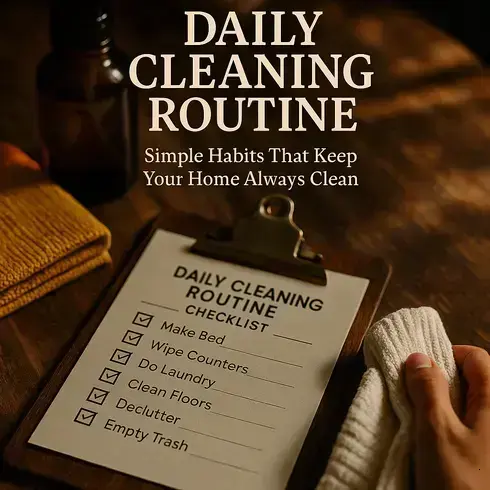
By the end, you’ll have a room-by-room rhythm, 5–10 minute resets, and a printable daily cleaning routine checklist you can follow on autopilot. Fewer decisions, less stress, a home that stays company-ready. Ready to start with the first quick win?
Why Small Daily Habits Beat Weekend Marathons
Ever notice how a Saturday “deep clean” swallows hours—yet by Tuesday the house looks lived‑in again? Small daily habits flip that script. They turn chaos into light maintenance, not a weekly rescue mission.
Here’s the thing: dirt and clutter compound. When you wipe spills now, run a 5‑minute tidy tonight, and reset counters after breakfast, you prevent build‑up that needs chemicals, elbow grease, and a lost weekend later.
💡 Pro Tip: The American Cleaning Institute notes that consistent “clean‑as‑you‑go” routines reduce soil load and total cleaning time. The CDC recommends routine cleaning of high‑touch surfaces—disinfect when someone is sick or germs are a concern.
Daily Habits vs. Weekend Marathon — Time And Stress
| Approach | Weekly Time | Outcome |
|---|---|---|
| 10–15 min daily micro‑tasks | 70–105 min | Stable “always‑ready” rooms, low stress, fewer deep cleans |
| Weekend marathon (single session) | 180–240 min | Short‑lived shine, high fatigue, higher chance of skipping next week |
| Outsourcing only, no dailies | Cost varies | Great after service day, but mid‑week clutter rebounds fast |
Picture this scenario: your friend Mia used to blast her Saturdays. Four hours. Exhausted. By midweek, counters were sticky again. She switched to a 12‑minute nightly reset, a quick floor sweep on odd days, and a Friday sheet swap—weekends came back.
Time: 10–15 minutes daily. Prerequisite: pick one fixed slot (after dinner works) and protect it like any meeting—consistency beats intensity.
- Timer (phone or cube)
- Cleaning caddy: microfiber cloths, all‑purpose spray, glass cleaner
- HEPA vacuum or cordless stick vac
- Laundry basket for quick “rehome” runs
- Disposable gloves for bathrooms
- Choose your daily slot and set a repeating reminder.
- Assign theme days: Floors (Mon), Surfaces (Tue), Bathroom touch‑ups (Wed), Dust (Thu), Linens (Fri).
- Run a 2‑minute clutter sweep first—use the basket to collect and rehome.
- Hit high‑impact zones: sink, stove area, coffee table, entry drop‑zone.
- Finish with one “future‑you” task: start dishwasher or set laundry to delay start.
- Once a week, add a 15‑minute “booster” for whatever slipped.
Why it works? You lower activation energy, cut opportunity cost of weekends, and keep soil at a “maintenance clean” level—less chemical use, less scrubbing.
And this is exactly where most people make the most common mistake…
The 10-Minute Morning Reset That Sets The Tone
Mornings move fast. A 10‑minute reset—done the same way every day—shrinks visual clutter, keeps kitchen germs in check, and switches your brain from panic to calm focus.
Here’s the thing: predictability beats motivation. When the steps are tiny and fixed, you won’t waste energy deciding what to do first, and mess won’t have time to stick around.
💡 Pro Tip: Clean first, then disinfect when needed. The CDC recommends routine cleaning of high‑touch surfaces and targeted disinfection during illness or after handling raw foods. The American Cleaning Institute notes that letting a product sit for its labeled “dwell time” (often 1–5 minutes) improves effectiveness.
What You Need For A Fast Reset
- Microfiber cloths (color‑code for kitchen vs. bathroom)
- All‑purpose cleaner with EPA Safer Choice label
- Dishwasher-safe drying mat
- Compact caddy for supplies
- Small bin for quick toss items
- Phone timer or cube timer
Time: 10 minutes total. Prerequisite: counters mostly clear and sink empty enough to load. Worth noting: if you have asthma or chemical sensitivities, consult a healthcare professional about safer products and ventilation.
Step‑By‑Step: 10‑Minute Morning Reset
- Start the clock (0:00–0:10). Turn on bright task lighting—more light helps you see crumbs and smudges you’d miss.
- Make the bed (0:10–1:20). Straighten duvet, fluff pillows. This fast win anchors the morning and reduces room dust on fabrics.
- Quick sort surfaces (1:20–3:00). Use the small bin to scoop out‑of‑place items; rehome after the timer, not now.
- Kitchen first pass (3:00–5:30). Load any stray dishes, start dishwasher if 75% full, wipe sink rim and faucet.
- High‑touch wipe (5:30–7:30). Spray and let sit: counters, fridge handle, microwave buttons. While it dwells, move to the next step.
- Entryway sweep (7:30–8:30). Reset shoes to a mat, hang keys, shake doormat once—this reduces soil tracked through the day.
- Final polish (8:30–10:00). Return to the kitchen; wipe surfaces you sprayed, place drying mat, and do a 20‑second visual scan for crumbs.
In practice: picture this scenario—Sam used to bounce between tasks and forget half of them. After setting a 10‑minute timer and fixing the order above, his sink stayed clear by noon, and weeknight cleaning dropped by a third.
The truth is, a tight morning sequence builds compounding cleanliness and frees mental bandwidth for work or family. But there’s one detail most people overlook until it’s too late…
Room-By-Room Quick Checklist (Kitchen, Bathroom, Bedroom, Living Room)
You don’t need a full clean—just the right hits in each room. Think “impact per minute,” not perfection. That’s how homes stay guest‑ready.
💡 Pro Tip: Keep a small caddy per zone and follow product labels for dwell time and ventilation; the Environmental Protection Agency advises proper use for safety and results. For bedding, the Asthma and Allergy Foundation of America recommends weekly hot washes (around 130°F) to reduce dust mites and allergens.
Kitchen — 4–6 Minutes
- Load dishes; run if 75% full.
- Wipe sink, faucet, and handles.
- Spot clean stove knobs and microwave front.
- Clear and spray high‑touch counters; quick wipe.
- Crumb sweep with handheld or mini vac.
- Trash/compost check; tie if near full.
Bathroom — 4–6 Minutes
- Clear vanity; spritz and wipe faucet, handles, and counter.
- Mirror swipe with glass cleaner—no streaks.
- Toilet: rim, seat, and flush lever; quick bowl swish.
- Swap hand towel; empty small bin.
- Run fan for 10 minutes to cut moisture.
Bedroom — 3–5 Minutes
- Make the bed; smooth duvet and pillows.
- Nightstands: reset, coaster down, quick dust.
- Clothes into hamper; shoes to a mat.
- 60‑second perimeter vacuum near bed.
- Open shades for light and airflow.
Living Room — 3–5 Minutes
- Collect cups/plates; send to kitchen.
- Fold throws; fluff cushions for shape.
- Wipe remotes, switches, and coffee table.
- Basket sweep: toys, mail, randoms—rehome later.
- Fast pass with HEPA stick vac on traffic lanes.
| Room | Target Time | High‑Impact Focus |
|---|---|---|
| Kitchen | 4–6 min | Dishes, sink, high‑touch counters |
| Bathroom | 4–6 min | Vanity, toilet touch points, mirror |
| Bedroom | 3–5 min | Bed made, clutter control, quick vac |
| Living Room | 3–5 min | Surfaces, remotes, traffic lanes |
In practice: picture this scenario—Jess tapes this checklist inside a cabinet door, sets a 15‑minute timer, and moves clockwise through rooms. Eighteen minutes later, the house looks fresh, not staged—and her Saturday stays free.
Here’s the thing: light, frequent passes keep soil at “maintenance level,” which cuts chemical use and elbow grease later. What actually works might surprise you…
Evening Sweep: Close The Day In Under 15 Minutes
Evenings decide tomorrow’s mood. A quick 12–15 minute sweep—done the same way every night—resets visual clutter, lowers stress, and makes morning you wildly grateful.
Here’s the thing: closing loops before bed calms the brain. The National Sleep Foundation notes that consistent wind‑down routines reduce bedtime arousal and help you fall asleep faster—tidy space, quieter mind.
💡 Pro Tip: Run the dishwasher only when full and pick air‑dry to save energy. The U.S. Department of Energy recommends using efficient cycles and, if you’re on a time‑of‑use plan, scheduling during off‑peak hours for lower utility costs.
Gear You’ll Keep Handy
- Microfiber cloth + all‑purpose cleaner (kitchen safe)
- HEPA stick vacuum for traffic lanes
- Small bin for “rehome tomorrow” items
- Dish tabs and a drying mat
- Disinfecting wipes for remotes and handles
- Trash ties and extra liners
15‑Minute Evening Sweep — Steps
- Start the timer (0:00–0:30). Turn on brighter task lights—seeing dust makes you faster.
- Living room reset (0:30–3:00). Fold throws, fluff cushions, collect cups, wipe remotes and the coffee table.
- Kitchen quick pass (3:00–7:00). Load remaining dishes, start dishwasher if 75–100% full, spray and wipe sink and high‑touch counters.
- Entryway check (7:00–9:00). Shoes to mat, hang keys and bags, shake the doormat once to reduce tomorrow’s tracked soil.
- Bathroom touch‑ups (9:00–11:00). Swap hand towel, swipe faucet and mirror corners, quick toilet lever and seat wipe.
- Trash and recyclables (11:00–13:00). Tie if near full; drop a fresh liner to prevent odors.
- Future‑you setup (13:00–15:00). Lay out breakfast basics, fill water bottles, and preload washer with delay start for morning. The National Fire Protection Association advises avoiding running dryers while asleep.
In practice: picture this scenario—Avery used to crash on the couch and face sticky counters at dawn. After adopting this exact 7‑step sweep, mornings felt lighter, and weekend deep cleans shrank to a monthly booster.
The truth is, a reliable evening close keeps soil at maintenance levels and protects your bandwidth for real life. And this is exactly where most people make the most common mistake…
Tools, Timers, And Tiny Habits That Keep You Consistent
Staying consistent isn’t about willpower — it’s about lowering friction and making the next action obvious. Timers, tidy tools, and tiny anchors do that job beautifully.
Here’s the thing: when a task is small and cued by something you already do, it runs on autopilot. Stanford Behavior Design Lab explains that “anchor moments” (like making coffee) paired with a tiny habit (30‑second counter wipe) wire in faster because they don’t depend on motivation spikes.
💡 Pro Tip: Pair a visual timer with an “if‑then” plan: “If dinner plates hit the sink, then I start a 5‑minute reset.” The American Psychological Association describes these implementation intentions as a reliable way to turn intentions into action under real‑life stress.
Choosing The Right Timer
| Tool | Best For | Why It Helps |
|---|---|---|
| Analog cube timer (5/10/15/20) | Fast starts, no app fuss | One flip = go; zero setup removes decision fatigue |
| Time Timer MOD (visual disk) | Families and ADHD‑friendly visuals | Red disk shows time shrinking — great for kids and shared routines |
| Forest (Seekrtech) or Focus mode | Phone‑based focus with rewards | Gamified blocks reduce doomscrolling during quick resets |
In practice: Leo struggled to keep evenings tidy. He parked a compact caddy by the fridge and used a 10‑minute cube right after loading the dishwasher. The anchor was “dishwasher on,” the habit was “wipe, sweep, trash check,” and the celebration was a tiny fist pump (yes, cheesy — but it works). Two weeks later, he skipped only twice because the cue did the heavy lifting.
The truth is, tools only win when they live where the work starts. Keep a microfiber and spray at each “mess hotspot” (entry drop zone, coffee station), store the HEPA stick vac on a visible dock, and use a smart speaker reminder that chimes with your anchor, not at a random time. You’re engineering the environment so the routine is the default, not the exception.
Build your loop like this: anchor (already happens) → micro‑action (2–5 minutes) → visible end point (timer buzz) → tiny celebration. Add a weekly 15‑minute booster only when the daily feels effortless. Small steps, repeated consistently, make the biggest difference over time.
Your Home, On Autopilot
You learned why small daily habits beat weekend marathons, how a 10‑minute morning reset sets the tone, and how an evening sweep locks it in with simple tools. Use the room‑by‑room quick hits when time is tight. Pair timers with tiny habits to stay consistent. If you take just one thing from this guide, let it be: routine over motivation—set micro tasks, same time, every day. Keep your daily cleaning routine checklist visible and run it on autopilot.
Before, mess snowballed. Weekends vanished. Mornings felt scrambled. Now you’ve got a clear rhythm: quick reset at dawn, focused room passes, and a calm close at night. Less scrubbing, less decision fatigue, more free time. Small wins, stacked daily, change the feel of your home.
Which tiny habit or timer will you start tonight—morning reset, room sweep, or the 15‑minute close—so we can cheer you on in the comments?

About the Author:
Claire Anne Foster is a home organization enthusiast, lifestyle writer, and the founder of this blog — built for people who want a cleaner, calmer home without spending every weekend doing it.
After years of testing every organization system, planner, and cleaning routine she could find, Claire realized that most advice was either too complicated to maintain or too generic to be useful. So she started creating her own — simple, printable, and designed for real life with real schedules.
Claire is not a professional organizer or interior designer — just someone who genuinely loves a well-organized home and believes that the right checklist or routine can change how your entire week feels. Every resource on this site is practical, tested, and designed to be used — not just pinned and forgotten.
When she’s not writing or reorganizing her pantry for the third time, Claire is testing new meal planning systems, exploring better morning routines, and convincing her family that yes, everything does need a labeled bin.