
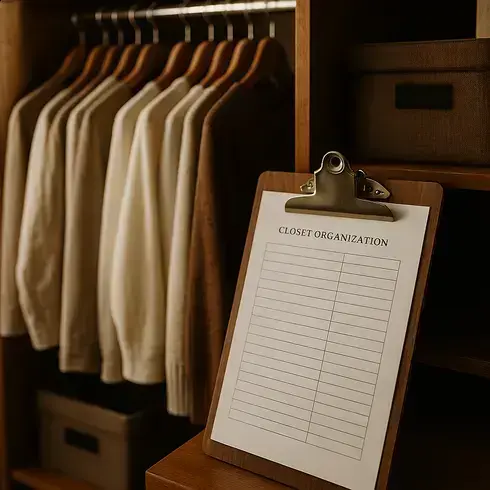
Picture this: you yank open your closet at 7 a.m., clothes spill out, and the one shirt you love is missing—again. That tiny delay snowballs into a late start and a frazzled morning. A simple closet organization checklist printable could’ve stopped it before it started.
The mess isn’t just visual; it’s mental. You waste minutes deciding, rebuy items you already own, and damage pieces crammed on the wrong hanger. And honestly? That low-grade stress follows you all day, stealing focus you need for real life.
By the end, you’ll have a clear sorting flow, right-fit zones, smart storage, and a ready-to-use closet organization checklist printable. You’ll know exactly what stays, what goes, and where everything lives. Ready to start with what you actually wear?
Diagnose What You Own And What You Actually Wear
What do you actually wear—not think you wear? A quick diagnosis turns guesswork into data, cuts decision fatigue, and exposes money pits like duplicate basics or never-used heels.
Setup time: 25–35 minutes. Tracking runs passively for 30 days, then you’ll have hard numbers to guide edits, a capsule wardrobe, and smarter storage zones.
- Phone timer
- Full-length mirror
- Sticky notes or masking tape
- Two bags: donate and sell
- Notes app or paper tally
- Rubber bands or hanger markers
- 5‑Minute Count By Category: List tops, bottoms, layers, shoes. Flag duplicates (three black leggings?) and specialty pieces.
- Reverse‑Hanger Baseline: Flip hangers backward. When you wear an item, rehang it forward. For folded items, tag with a sticky and remove it after a wear.
- 10‑Minute Laundry Audit: Check the hamper and last two clean loads. These are your true MVPs—note color, fabric, and fit patterns.
- Try‑On Litmus: Maybes must pass fit, comfort, and style in two real outfits. Anything that tugs, pinches, or needs repair gets an “Alter” note with a date.
- Cost‑Per‑Wear Math: Price ÷ wears. Everyday pieces should trend under $3; occasion items under $10 over a season—adjust for your budget.
- Tag Next Actions: Keep (prime zone), Alter (deadline), Off‑Season (labeled bin), Donate/Sell (bag now), or Sentimental (limited box).
In practice: Picture this scenario: Monday, 7:12 a.m., Maya needs a blazer. After 30 days of reversed hangers, only 18 of her 62 tops moved forward. She tailored one blazer, donated two, and her morning routine dropped by 6 minutes—no more panic swaps.
Quick Wardrobe Tally (Sample)
| Item | 30‑Day Wear Rate | Next Action |
|---|---|---|
| White Crewneck Tee | 6 wears | Keep in prime zone; buy duplicate if aging |
| Black Blazer | 0 wears | Tailor sleeves; review in 2 weeks |
| Heeled Pumps | 0 wears | List for resale; note sunk cost |
| Rain Jacket | 1 wear (seasonal) | Off‑season bin near entry |
| Floral Midi Dress | 1 wear; CPW $45 | Sell or schedule event; decide by month‑end |
💡 Pro Tip: The American Psychological Association notes that fewer choices reduce decision fatigue. Organizing specialists (including NAPO members) use reverse‑hanger tests to capture real behavior—your best predictor of future wear.
But there’s one detail most owners completely overlook until it’s too late—the location of each zone and how it nudges what you grab next…
Set Up Zones And Storage That Fit Your Space
Which pieces do you reach without thinking? That’s your map. Build zones around instinctive grabs so mornings feel automatic—no digging, no shuffling, no second-guessing.
Here’s the thing: height matters. Keep the Prime Zone at chest to eye level, the Secondary Zone just above or below, and an Archive Zone up high or underbed. According to the U.S. Access Board (ADA reach ranges), items between 15–48 inches are the most accessible—use that as your anchor.
- Double‑Hang Rod: Split shirts and pants; aim for ~40 in. and ~80 in.
- Shelf Risers: Add vertical tiers so stacks don’t collapse.
- Uniform Slim Hangers: Increase capacity and keep shoulders crisp.
- Clear Bins + Labels: Fast ID for knits, scarves, and athleisure.
- Over‑Door Rack: Shoes, belts, or bags without floor sprawl.
- Vacuum Bags: Compress bulky off‑season items—only for non‑daily wear.
| Space Type | Key Upgrades | Why It Works |
|---|---|---|
| Small Reach‑In | Double‑hang rod, shelf risers, over‑door organizer | Creates two levels, frees floor, stops stack slumps |
| Walk‑In | Modular closet system, drawer dividers, island tray | Zones by category, hidden storage, surface for outfits |
| No Closet | Freestanding wardrobe, underbed bins, wall hooks | Uses vertical wall space and keeps dust off daily wear |
💡 Pro Tip: Place daily essentials in the front 24 inches of rod space at shoulder height. Label shelves on the front edge—labels coach your future self when you’re rushed.
Picture this scenario: a city studio, one 36‑inch bar, zero drawers. You install a double‑hang, add clear shoe boxes under the lower rod, and mount two wall hooks near the door. Result? Jackets stop crowding blouses, shoes leave the floor, and outfits appear in minutes.
Worth noting: premium modular systems offer better load ratings and adjustable shelves, but a budget kit plus consistent labeling often nails 80% of the benefit. And this is exactly where most people make the most common mistake—putting favorites out of reach and expecting willpower to fix it…
The 30-Minute Declutter Flow: Sort, Decide, Rehome
You’ve got 30 minutes. That’s enough to cut serious clutter—if you follow a tight flow that forces fast decisions and gets items out of circulation now.
The truth is: speed beats perfection. Timeboxing removes overthinking, and clear exit paths prevent backsliding when energy dips near the end.
What You’ll Need (2 minutes)
- Timer (phone works fine)
- Four containers: Keep, Donate, Sell, Recycle
- Lint roller, seam ripper, mini repair kit
- Sticky notes + marker
- Trash bag for true waste
- Stage The Zone (3 min): Pick a micro‑area—one rod section or one shelf. Pull items into sight. Close the rest so you can’t wander.
- Fast Sort Sweep (7 min): Touch each piece once. If worn weekly, place in Keep. If unworn 90+ days (season adjusted), slide to Decide pile.
- Decide With Rules (8 min): Use three checks: fit now, comfort for 8 hours, matches 2 outfits. Miss any? It leaves your closet—Donate, Sell, or Recycle.
- Quick Repair Or Release (4 min): Pop loose threads, remove lint. If it needs real tailoring, tag “Alter” with a date. No appointment by that date? It exits.
- Rehome Immediately (4 min): Bag Donate and Recycle, box Sell. Move them to the car or entry. Keep returns to prime shelves and rods.
- Document Wins (2 min): Jot totals: items kept, donated, sold. Cost‑per‑wear will drop—easier outfits tomorrow.
💡 Pro Tip: Limit choices to reduce decision fatigue. The American Psychological Association notes that fewer daily options improve follow‑through. The U.S. Environmental Protection Agency reports millions of tons of textiles are landfilled yearly—recycling or donating diverts waste and frees space.
In practice: Taylor set a 30‑minute timer for one shelf and ten hangers. Eleven items left her closet, three moved to Alter with dates, and her weekday routine shrank by five minutes—every single morning.
Worth noting: if you plan to claim a donation deduction, keep a receipt and consider asking a tax professional about fair‑market valuation and limits.
And this is exactly where most people make the most common mistake—stopping after one sprint instead of locking in maintenance with hangers, labels, and seasonal swaps…
Smart Systems For Maintenance: Hangers, Labels, And Seasonal Swaps
Systems keep order long after the big clean. You want habits that run on autopilot—so hangers, labels, and seasonal swaps do the heavy lifting for you.
Here’s the thing: maintenance beats marathon declutters. Small, repeatable cues (a label edge, a uniform hanger, a dated bin) prevent drift and protect fabrics between laundry cycles.
- Hanger Discipline: One style per rod for a flat “scan line.” Wide‑shoulder hangers for blazers; flocked for slippery blouses; clip bars for trousers.
- Capacity Guardrail: Cap at ~60 hangers per 4‑ft rod. When you add one, remove one—no exceptions.
- Front‑Edge Labels: Label shelves by category and size (e.g., “Knit Sweaters, max 8”). Labels remind you where items return.
- Laundry Loop: After wash day, rehang facing forward; after 60 days, anything still backward gets reviewed.
- Climate Control: Aim 30–50% humidity; add cedar rings for odor, use breathable garment bags, skip plastic for long‑term storage.
| Frequency | Task | Why It Matters |
|---|---|---|
| Weekly (10 min) | Reset hangers, fold strays, clear floor | Prevents clutter creep and protects hems |
| Monthly (15 min) | Lint/pill removal, spot repairs, CPW check | Extends lifespan, improves outfit readiness |
| Seasonal (45 min) | Swap bins, launder before storage, update labels | Stops dust/moths; keeps rotation current |
⚠️ Important Warning: The U.S. Environmental Protection Agency recommends indoor humidity around 30–50% to deter mold. Avoid mothballs in living areas—Consumer Product Safety Commission notes they contain pesticides that require sealed use and safe handling.
Picture this scenario: after a spring swap, you store wool in breathable bags with cedar, set a 45‑minute timer, and cap hangers at 60. By fall, sweaters are fresh, rails glide, and your morning routine drops by five minutes—every day.
Worth noting: archival garment bags and acid‑free tissue reduce fabric stress, while a compact dehumidifier protects leather and suede. What actually works might surprise you…
Downloadable Checklist And Printable Setup Guide
You don’t need another storage gadget—you need a one-page map that keeps you honest. This printable is your command center, not another project.
It compresses choices into simple checkboxes and micro-deadlines. With a closet organization checklist printable, you’ll see what to wear, what to fix, and what to release—without second-guessing.
What’s Inside The Printable
- 60‑Second Inventory Snapshot: Quick tally of tops, bottoms, layers, and shoes.
- Zone Planner Grid: Prime, Secondary, Archive—note shelf inches and rod space.
- 30‑Minute Declutter Flow: Tick boxes that mirror the sprint you’ve learned.
- Maintenance Cadence: Weekly, monthly, and seasonal resets with time estimates.
- Donations & Consignment Log: Item counts, destination, and pick‑up/drop‑off date.
- Alterations & Repairs Tracker: Tailor notes with a due date line.
- Cost‑Per‑Wear Mini Calculator: Quick math to guide smarter buys.
How To Use It (5 Steps)
- Print And Place: Tape one sheet inside the closet door at eye level; keep a spare on a clipboard.
- Start Date + Hangers: Write today’s date, flip hangers backward, and check the “tracking started” box.
- Run One Sprint: Do a 30‑minute declutter and mark boxes; bag exits immediately.
- Weekly Reset: Schedule a 10‑minute fold-and-rehang block; update zone counts if categories overflow.
- 30‑Day Review: Circle anything unworn, move to Donate/Sell, and update the log for tax or resale records.
💡 Pro Tip: Laminate the sheet and use a fine dry‑erase marker. The World Health Organization shows checklists improve adherence in complex workflows—apply the same logic to your wardrobe when mornings are rushed.
Worth noting: NAPO (National Association of Productivity & Organizing Professionals) emphasizes visible cues. A front‑edge label plus a dated checkbox outperforms willpower every time.
In practice: Jordan prints two copies, tapes one inside the door, and sets a 30‑day review. Fourteen items exit, two go to alterations, and mornings drop by seven minutes—while consignment recoups $85.
Once this is in place, the rest of the routine falls into place naturally.
Your Closet, Finally Under Control
You learned how to diagnose real wear, build zones that match your space, and keep momentum with quick sprints and simple systems. If you take just one thing from this guide, let it be: organize around what you actually wear, not what you own. Use the closet organization checklist printable to keep choices clear and actions simple.
Before, mornings felt messy and rushed. You dug through piles, re-bought basics, and still couldn’t find that go-to piece. Now outfits appear fast. Zones guide your hands. Exits happen the same day. Maintenance is light, predictable, and almost automatic.
Which zone will you set up first — Prime, Secondary, or Archive? Tell us in the comments!

About the Author:
Claire Anne Foster is a home organization enthusiast, lifestyle writer, and the founder of this blog — built for people who want a cleaner, calmer home without spending every weekend doing it.
After years of testing every organization system, planner, and cleaning routine she could find, Claire realized that most advice was either too complicated to maintain or too generic to be useful. So she started creating her own — simple, printable, and designed for real life with real schedules.
Claire is not a professional organizer or interior designer — just someone who genuinely loves a well-organized home and believes that the right checklist or routine can change how your entire week feels. Every resource on this site is practical, tested, and designed to be used — not just pinned and forgotten.
When she’s not writing or reorganizing her pantry for the third time, Claire is testing new meal planning systems, exploring better morning routines, and convincing her family that yes, everything does need a labeled bin.