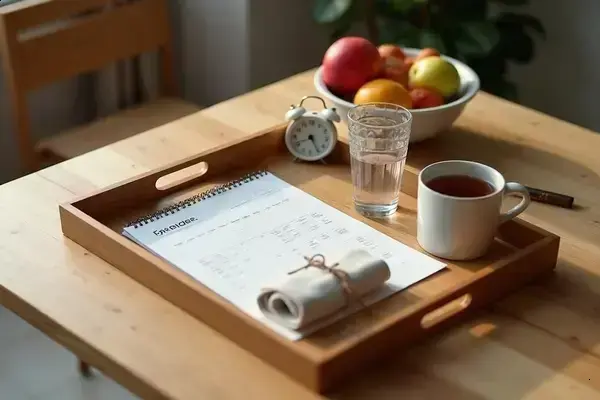
It’s 5:30 p.m., the fridge stares back, and takeout tempts you yet again. Wish you had a meal planning template printable free that actually works — fast? Thirty minutes now could save your entire week.
The daily dinner scramble isn’t just annoying; it drains money and mental energy. You buy greens that wilt, forget one key ingredient, and end up tapping that delivery app (again). Decision fatigue hits hard, and before you know it, you’re overspending and still stressed at mealtime.
Here’s the thing: by the end, you’ll map seven dinners in 30 minutes, build a smart grocery list, and slot leftovers like a pro — all with a meal planning template printable free you can actually use. Clear the counter, take a breath, and let’s set you up in minutes.
The 30-Minute Setup: What You Need On The Counter
Ready to blitz your dinner chaos? Here’s the thing: a clean counter, the right tools, and a 30‑minute timer turn guesswork into a simple system. Wonder how to set it up fast—without overthinking it?
Gather these on the counter first. Keep it tight and visible.
- Printed weekly meal planning template (or a tablet with the template open)
- Family calendar with events and late nights
- Pen + small sticky notes for swaps
- Phone timer set to 30 minutes
- Pantry, fridge, and freezer inventory sheets
- Recent grocery receipt or budget number
- Basic recipe sources (cookbook or app)
- Trash/recycling bin nearby for quick cleanouts
Total time: 30 minutes. Prerequisite: a single, one‑page template you can scan at a glance.
💡 Pro Tip: The Academy of Nutrition and Dietetics notes that planning with a list reduces impulse buys and food waste—slot perishables early in the week and shelf-stable items later.
| Item | Use In The Sprint | Why It Matters |
|---|---|---|
| Weekly Template | Assign 7 dinners, notes, and prep | One page = no scattered decisions |
| Family Calendar | Mark busy nights and leftovers | Prevents overcooking and last‑minute takeout |
| Inventory Sheets | Check proteins, produce, staples | Use what you have first—less waste |
| Budget Number | Guide choices and portions | Keeps cost per serving in check |
| Recipe Source | Pull quick, reliable meals | Reduces decision fatigue fast |
- Start the 30‑minute timer (1 min). Decide your budget ceiling—just a number.
- Scan the calendar (4 min). Tag two “busy night” dinners and one leftover night.
- Audit pantry, fridge, freezer (7 min). Circle proteins and near‑expiry items first.
- Sketch the week (8 min). Anchor 3 “cook once, use twice” ideas—like roast chicken → tacos.
- Build the grocery list by aisle (7 min). Note quantities and swap brand‑name for store brand when cost per unit spikes.
- Mark 2 tiny prep blocks (3 min). Example: chop onions Sunday; cook rice Tuesday.
In practice: picture this scenario—Maya has soccer pickups on Tue/Thu. She pencils sheet‑pan sausages for Tue, chili Wed using leftover sausages, and freezer pizza Thu. With one page on the fridge, she spends $18 less and skips a drive‑thru. According to the USDA Dietary Guidelines for Americans, planning ahead supports healthier choices and portion control.
What actually works might surprise you…
How To Use The Template: Fill, Swap, And Shop
You’ve got the template on the counter—now make it work for you. Keep it simple, fast, and flexible. The truth is: small choices here save you all week.
How do you actually fill it without second‑guessing every box? Start with the 3‑2‑1 formula: three 20‑minute meals, two leftover‑friendly meals, one freezer or sheet‑pan night, and one flex night. Add two “theme anchors” (Taco Tuesday, Pasta Friday) so decisions snap into place.
💡 Pro Tip: Plan dinners before you shop. According to Harvard T.H. Chan School of Public Health, home‑cooked, planned meals improve diet quality and help control sodium when you buy with a focused list.
Fill → Swap → Shop Flow
| Situation | Swap Strategy | Example Dinner |
|---|---|---|
| No protein thawed | Use pantry protein | Chickpea curry + rice |
| Kid activity night | One‑pan, 20 min max | Sheet‑pan fajitas |
| Veg near expiry | All‑in stir‑fry | Garlic tofu + veggie mix |
| Budget squeeze | Private label swap | Store‑brand pasta + beans |
Time to shop smarter, not longer. Target about 12 minutes to finalize the list, then you’re done.
- Group items by aisle. Produce, proteins, dairy, dry goods—less backtracking, fewer “oh no” moments.
- Check unit price on the shelf tag. If bulk wins by 20%+, buy and freeze portions.
- Prioritize perishables early in the week. Save shelf‑stable meals for days 5–7.
- Choose private label for staples (oil, beans, oats). Keep brand names for true quality drivers.
- Add two “prep boosters”: pre‑chopped mirepoix or rotisserie chicken to speed midweek dinners.
- Use loyalty promos, not impulse “BOGO.” Stick to the plan you already filled.
In practice: picture this scenario—Leo plans salmon bowls Monday but finds salmon overpriced. He swaps to lentils on the template, keeps the same toppings, and updates the list in under 60 seconds. Net result: simpler macros, less cost per serving, and zero stress at 6 p.m.
If you manage a medical condition or specialized diet, consult a registered dietitian for personalized guidance.
And this is exactly where most people make the most common mistake…
Smart Shortcuts: Batch, Leftovers, And Freezer Wins
Hate chopping onions every night? Batch once, breathe all week. The truth is: a few smart make‑aheads cut your cost per serving and your stress at 6 p.m.
Think in three buckets—batch base, leftover remix, freezer anchor. You cook foundations now, remix them midweek, and stash a safety net for the night plans fall apart. Simple, flexible, reliable.
Quick Batch Hits (60–90 Minutes)
- Roast two sheet pans: one protein, one vegetables. Season neutrally so you can swing flavors later.
- Cook a grain pot (8 cups yield): rice, farro, or quinoa. Portion into 1‑cup packs for fast bowls.
- Blend a double sauce: red pepper pesto, chimichurri, or yogurt‑dill. Sauces change the whole vibe.
- Make a mirepoix kit: onions, carrots, celery—freeze flat in 1‑cup bags for instant starts.
💡 Pro Tip: Cool hot foods fast in shallow containers (under 2 inches) and refrigerate within 2 hours. USDA Food Safety and Inspection Service notes this reduces bacterial growth and preserves texture for safe, tasty leftovers.
- Line a tray and “flash‑freeze” portions so they don’t clump.
- Label each pack with item, date, and cook‑by window (e.g., 3 months for cooked meats).
- Freeze flat in bags for space efficiency; vacuum‑seal if you own one.
- Move to bins by category—proteins, grains, sauces—for FIFO (first in, first out).
- Log inventory on your template so you actually use it.
Picture this scenario: Jordan works late Tuesdays. On Sunday, they roast 3 lb chicken, 2 trays of veggies, and cook 2 cups dry quinoa. Tuesday becomes lemon‑herb bowls in 10 minutes; Thursday flips leftovers into tacos. Net: two dinners under $3.25 per serving with better macro balance than drive‑thru.
Worth noting: the USDA FoodKeeper guidelines outline typical freezer times—most cooked dishes hold quality for 2–3 months, while sauces often last longer. Plan “use by” dates on the template so your inventory turns over before flavor fades.
But there’s one detail most home cooks completely overlook until it’s too late…
Budget And Dietary Tweaks Without Extra Work
Want to shrink your grocery spend by 15–20% without cooking twice? Here’s the thing: small, repeatable swaps do the heavy lifting—your time on the clock doesn’t change.
Start with one anchor dinner, then set two levers: budget and diet. You’ll swap ingredients inside the same method (sheet pan, skillet, slow cooker), so prep, cook time, and cleanup stay steady.
Quick Swaps That Save And Fit
| Swap | Budget Impact | Dietary Fit |
|---|---|---|
| Ground beef → Half beef + lentils | Often 25–35% less per serving | More fiber, steadier glycemic load |
| Salmon fillet → Canned tuna/mackerel | Lower cost for omega‑3s | Heart‑healthy fats, pantry‑stable |
| Chicken breast → Bone‑in thighs | Typically cheaper per pound | Juicier, higher iron; same methods |
| Sour cream → Greek yogurt | Similar price, higher yield | More protein, lower sat fat |
| White rice → Brown or cauliflower rice | Comparable cost (or DIY) | More fiber or lower carbs |
| Soy sauce → Low‑sodium tamari | Small premium, big payoff | Gluten‑free, reduced sodium |
- Use the “rule of two”: one budget swap + one dietary swap per meal. No extra pans, no extra steps.
- Stretch satiety with beans, eggs, or tofu—cheap protein that keeps macros balanced.
- Pick private label for staples (oats, beans, oil) and save brands for true flavor drivers (cheese, spices).
- Target sodium under 2,300 mg/day for most adults; season with acids (lemon, vinegar) for punch without salt.
- Keep a “swap key” on the template so anyone in the house can make the same call when prices jump.
💡 Pro Tip: Scan the Nutrition Facts label first. The American Heart Association recommends limiting sodium for heart health—choose “low sodium” (140 mg or less per serving) and adjust with herbs and citrus at the end.
In practice: picture this scenario—Priya needs dairy‑free and her partner wants high‑protein on a tight budget. They plan fajita bowls, swap chicken breast for bone‑in thighs, use Greek‑style dairy‑free yogurt, and bulk with black beans. Same skillet, same timeline, lower cost per serving.
Worth noting: cost wins stack when you buy by unit price, freeze extras flat, and standardize one sauce per week. What actually works might surprise you…
Printable Template And One-Week Example You Can Copy
You asked for plug-and-play—here it is. The printable template is one page you can actually live with: a weekly grid for dinners, a grocery list split by aisle, tiny prep blocks, and a leftovers inventory lane so food doesn’t disappear behind the milk. It’s simple, visual, and built for real life.
So what do you fill where? Start by penciling busy nights straight onto the grid—those get the fastest meals or a leftovers icon. Assign perishables early in the week and push pantry staples to days five through seven. Note batch items (like extra roast chicken) in the prep block so you remember what future-you planned. Keep quick cost notes—unit price or total—next to big-ticket items to protect your grocery budget without thinking twice.
💡 Pro Tip: Use the USDA MyPlate balance right on the template: aim for half vegetables, one-quarter lean protein, one-quarter whole grains. Circle high-sodium sauces in the notes and balance with herbs or citrus to keep flavor high.
One-Week Dinner Plan You Can Copy
| Day | Dinner | Prep Note |
|---|---|---|
| Mon | Roast Chicken, Potatoes, Broccoli | Roast extra chicken for Wed tacos; store flat |
| Tue | Freezer-Friendly Turkey Chili | Use pre-chopped mirepoix; go low-sodium spice mix |
| Wed | Leftover Chicken Tacos | Shred Monday’s chicken; quick slaw; 10 minutes |
| Thu | Sheet-Pan Sausage & Mixed Veg | Clear near-expiry produce; one pan, 20 minutes |
| Fri | Penne Marinara With Spinach | Finish with yogurt for creamy feel; budget win |
| Sat | Salmon Bowls (or Tuna Swap) | Use batch rice; swap to canned tuna if prices spike |
| Sun | Clean-Out Frittata + Side Salad | Fold in leftover veg/cheese; prevents waste |
Picture this scenario: you print the template, slide it into a clear sleeve, and stick a dry‑erase marker to the fridge with a magnet. On Saturday morning, you update next week in 15 minutes, then do a 3‑minute midweek check to swap anything that changed—no rewriting, no mess. The template becomes your meal-prep dashboard, guiding portions, cost per serving, and freezer pulls without any extra work.
Once this is in place, the rest of the routine falls into place naturally.
Dinner Planning Just Got Easy
Three big wins: a 30‑minute setup that uses your calendar and inventory, a Fill → Swap → Shop flow that keeps choices simple, and smart batch/leftover/freezer moves that save time and money. If you take just one thing from this guide, let it be: use a single-page meal planning template printable free to plan once and glide all week.
Before, 5:30 p.m. felt like chaos—missing ingredients, pricey takeout, and food waste. Now you’ve got seven dinners mapped, a clean grocery list, and two quick prep blocks that carry you through busy nights. Less stress. Lower cost. Better plates.
Which part are you trying first—the 3‑2‑1 lineup, the swap key, or the freezer anchors? Tell us in the comments!

About the Author:
Claire Anne Foster is a home organization enthusiast, lifestyle writer, and the founder of this blog — built for people who want a cleaner, calmer home without spending every weekend doing it.
After years of testing every organization system, planner, and cleaning routine she could find, Claire realized that most advice was either too complicated to maintain or too generic to be useful. So she started creating her own — simple, printable, and designed for real life with real schedules.
Claire is not a professional organizer or interior designer — just someone who genuinely loves a well-organized home and believes that the right checklist or routine can change how your entire week feels. Every resource on this site is practical, tested, and designed to be used — not just pinned and forgotten.
When she’s not writing or reorganizing her pantry for the third time, Claire is testing new meal planning systems, exploring better morning routines, and convincing her family that yes, everything does need a labeled bin.